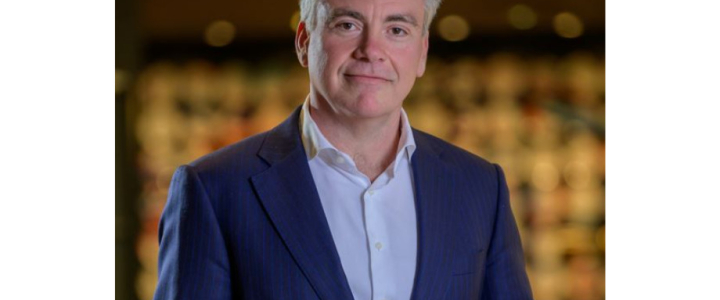
As social wellness experiences continue to gain momentum across Ireland, the traditional spa sector is reaching a pivotal moment. Inspired by discussions with some of the country's most influential spa operators, Andrew Hammond, Founder of Spa Life International and Publisher of Spa News, examines whether this new wave of wellness businesses represents increased competition—or a significant opportunity to grow the market.
Could beach saunas and cold-water communities be changing the future of Ireland's spa industry?
Walk along Ireland's coastline on a summer morning and you’re likely to encounter a scene that would have been a rare sight just a few years ago. Beach saunas, cold-water swimmers, and groups gathering for contrast therapy have become an increasingly familiar part of the landscape.
What began as a niche activity has evolved into a broader social wellness movement, bringing together heat, cold, movement and community in ways that appeal to a wide range of consumers. Similar concepts are emerging across Europe, but Ireland has become a particularly interesting market to watch.
For established spa operators, the trend inevitably raises questions. As more and more of these wellness businesses continue to appear, are they competing for the same customers, or are they expanding the overall wellness market?
The answer may be somewhere in between.
Wellness, reimagined
Traditional spas have long provided guests with opportunities to relax, recharge and escape from everyday pressures. These new social wellness businesses, by contrast, tend to focus on regular participation rather than occasional indulgence.
Many are built around recurring rituals rather than one-off visits. Guests might meet friends for a sunrise sea swim followed by a sauna, attend a guided breathwork session or simply become part of a social group that gathers several times each week.
Taken together, these developments suggest a broader change in how many people now view wellbeing. Wellness today is becoming something that is woven into everyday life rather than reserved for birthdays, anniversaries or hotel breaks.
That doesn't diminish the role of traditional spas, but it does indicate that consumer expectations are evolving.
Why Ireland is different
Ireland provides an especially interesting case study because several factors have combined to create fertile conditions for social wellness.
An extensive coastline, a well-established sea-swimming culture and growing public interest in cold-water immersion have created a ready-made audience for outdoor sauna experiences. Entrepreneurs have been able to build on existing behaviours rather than trying to create entirely new ones.
Many of these businesses have also benefited from relatively modest start-up costs compared with developing a full-scale spa, making it easier for independent operators to enter the market.
The result has been a noticeable increase in public saunas and other group wellness businesses since 2021. From mobile saunas on beaches, rivers and canals throughout Ireland, to permanent coastal facilities and dedicated contrast therapy venues, these businesses are expanding across the country, reflecting a growing consumer interest in social wellness experiences.
While the scale of the market remains modest compared with traditional hospitality, its visibility has prompted many spa operators to consider what this changing market might mean for their own businesses
Competing for the Same Customer?
It would be easy to assume that these new businesses are succeeding because they offer something that traditional spas cannot.
In reality, most hotel spas continue to provide more sophisticated thermal facilities, combined with highly trained therapists, premium hospitality and a broader range of wellness experiences.
Where social wellness operators have arguably been particularly successful is in creating regular habits.
Their customers often visit several times a week rather than a few times a year. They know the hosts, recognise familiar faces and become part of a community. The experience is as much about belonging as it is about the sauna itself.
That sense of connection has become one of the defining characteristics of the social wellness movement.
Reasons for optimism
Rather than viewing social wellness solely as a competitive threat, there is a strong argument that it also presents an opportunity.
Many spas already possess the facilities, expertise and environments that social wellness businesses are trying to create. It may simply be that a different approach to programming and engagement is all that is required to capture a share of this growing market.
Across Europe, a growing number of spa nad hospitality operators are introducing guided sauna rituals, wellness clubs, outdoor experiences, recovery sessions and membership models designed to encourage more frequent visits. Others are creating events that bring local communities into the spa, helping to build relationships that extend beyond the traditional hotel guest.
These initiatives don't require spas to abandon their identity. Instead, they build on existing strengths while responding to changing consumer demands.
Looking Beyond the Facilities
Perhaps one of the most significant lessons from the social wellness movement is that consumers increasingly remember how you made them feel more than the design of the venue.
Beautiful facilities remain important, but so do the people who welcome guests, the rituals they participate in and the sense of connection they take away.
For an industry that has traditionally measured success through treatment bookings and occupancy, there may be increasing value in thinking about engagement, loyalty and repeat participation.
A Conversation Worth Having
This article was prompted by recent Spa Life Ireland Advisory Panels, where senior spa leaders from across the country discussed the opportunities and challenges impacting their businesses.
While the discussions covered a wide range of issues, the rapid growth of social wellness emerged as one of the most thought-provoking. Some participants viewed it as an increasingly competitive force, while others saw it as evidence of a broader shift in consumer behaviour that could ultimately benefit the wider wellness industry.
That diversity of opinion is precisely why conversations like this matter. By bringing together operators, suppliers and industry experts, Spa News seeks to identify the issues that matter most to the sector and encourage informed discussion that benefits the industry as a whole.
Looking Ahead
The growth of social wellness doesn't necessarily signal a shift away from traditional spas. If anything, it demonstrates that public interest in wellbeing continues to grow.
The question for the industry is how best to respond.
Some operators may view the emergence of beach saunas and community wellness spaces as new competition. Others may see them as evidence that consumers are embracing healthier lifestyles and seeking more regular wellness experiences.
For spas, the focus should not be in replicating these models, but in learning from them. By combining professional expertise, high-quality facilities, and hospitality with a stronger emphasis on belonging, ritual and regular engagement, spas are well placed to remain at the heart of an evolving wellness landscape.
Ireland's social wellness movement may still be in its relative infancy, but it is already offering valuable insights into how the wider wellness market is changing. For spa operators, that makes it a trend worth watching—not necessarily with concern, but with curiosity and an open mind.
Further debate
The issue is likely to generate further discussion across the sector in the months ahead, including at industry gatherings such as the forthcoming Spa Life Ireland Convention.
(Spa Life Ireland 2026 takes place at Farnham Estate in Co. Cavan on 27-29 September).