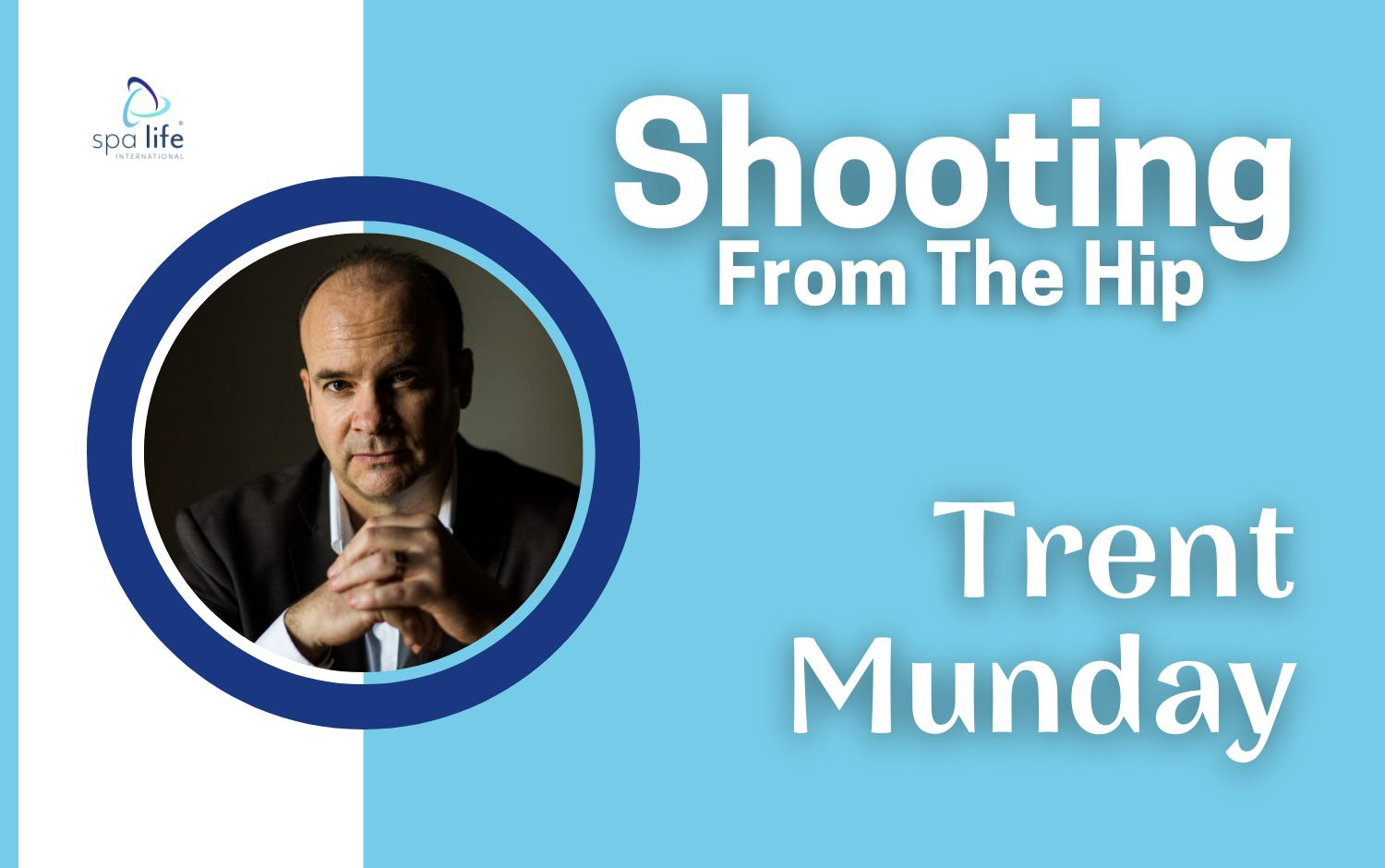
Trent Munday is Senior VP International at Mandara Spa and in his 25+ years’ experience in the hotel and spa industries across over 30 countries, Trent has developed a unique perspective on the business of spas. Trent’s voice resounds as one of practical business realities. He is one of the few who looks at things the way they are and asks 'WHY', and then doesn’t rest until all alternative perspectives have been considered. He is on a mission to provide bursts of reality in a sea of fluff. In addition to his role for Mandara Spa, Trent is also the host of the popular podcast, Inside the Spa Business.
I’ve got some great news. The hotel spa business is broken.
Hang on. I can’t say that. That’s way too negative. How about this … the hotel spa business is sub-optimal. Much easier to stomach, right?
But how is that good news? And what does that mean for you in the business?
For me, the glass is always half empty
I’m sure you’re all familiar with the classic philosophical question – is the glass half full or half empty? Whenever I ask this question to the audience at a spa conference, delegates overwhelming vote for half full. As you’d expect. Half full is the positive perspective and spa people are nice, positive people.
But to me, the glass is always half empty. I look to find the empty part. Why? Because empty = opportunity. There’s nothing more to be done with the full part, but we can still influence that part that is empty. That’s why I say it’s good news.
But why do I say it’s broken? Just take a look at the numbers.
By just about any metric you want to measure, hotel spas in most countries around the world are doing it tough. Capture rates in city hotel spas often hover between 1% and 3% of hotel guests. Even in the best resort spas, anything more than 30% is cause for celebration. Spa occupancy, one metric I rarely hear discussed, of around 30%-40% is generally deemed acceptable.
Even when it comes to therapist utilisation, many of the spas I see around the world have numbers well below 50%. And sure, you can argue that a spa therapist can’t be expected to do eight full hours of treatments per day. Maybe. But the simple fact is, those treatment hours are our main source of revenue. So, if our main revenue generators are only operating at 50% efficiency, or less, isn’t that problematic?
Of course these are generalisations and yes, there will always be exceptions. My concern is, over the years, we have tended to herald the exceptional whilst ignoring the norm.
I believe that the spa of tomorrow will have maybe 20% of what we know as spa today
In a little over 20 years, the hotel spa has gone from being a rarity to becoming ubiquitous. Today, you can almost guarantee that any 4 or 5-star hotel will have a spa. Guests expect it. Hotel ratings agencies require it. Travel agents want to see it. Consequently, hotel owners feel they must have a spa. Spas are essentially baked into the system.
Much has changed in the spa world since those early days of hotel spas in the 1990s. Yet, when I look back at how the hotel spa offering has evolved, I don’t see much change at all. Sure, we’ve had product innovation – although not as much as many skincare companies might like us to believe. We’ve also had some innovation in equipment and machines.
However, the core offering of the hotel spa has changed very little over the years. Little wonder then that many hotel spas are struggling to remain relevant to today’s increasingly discerning hotel guest.
I believe that the spa of tomorrow will have maybe 20% of what we know as spa today. What about the other 80%? Well, that’s what we now have work out.
Our glass really is half empty ... and that’s really exciting
It’s time to deconstruct and reimagine the hotel spa. No component should be spared. No ideas should be dismissed. We need to focus on servicing needs rather than wants. We also need to realise that there will be no one-size-sits-all model. That’s just not the way the world works anymore.
Our glass really is half empty … and that’s really exciting!