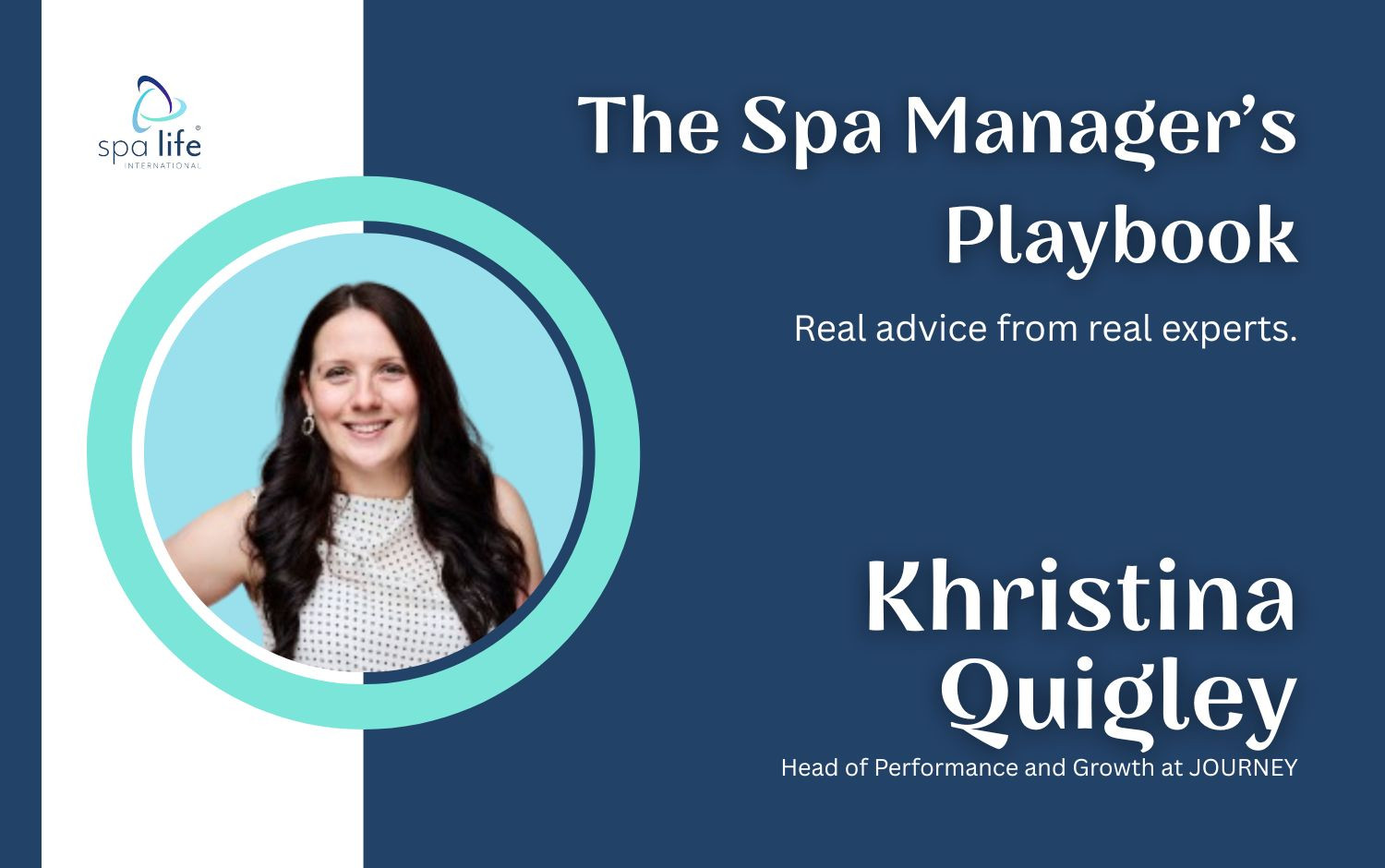
The Spa Manager’s Playbook.
More real world wisdom, and honest, practical advice, from seasoned professionals who have walked in your shoes.
The modern spa guest doesn’t browse — they decide. In this edition of The Spa Manager’s Playbook, Khristina Quigley, a specialist in digital booking optimisation, shares what thousands of online journeys reveal about guest behaviour: where conversions are lost, how value can outperform discounting, and why personalisation is now a non negotiable part of revenue strategy.
The Signals That Shape Guest Confidence Before Booking
SPA LIFE: Khristina, from analysing thousands of journeys, what indicators tell you a guest is feeling confident enough to complete a booking — and where do unnecessary steps start to undermine that confidence?
KHRISTINA: A high converting spa booking journey isn’t about limiting clicks; it’s about ensuring every interaction adds clarity. Each step should reinforce availability, price, inclusions, and what happens next. Guests drop off when they’re forced to do something that doesn’t help them make a decision — that’s where friction begins.
The best-performing journeys make the starting point unmistakable: simple categories, strong visuals, and real time availability really matter, coupled with a clear call to action like “Book Spa” or “Spa Treatments”.
Secure payment options and transparent cancellation policies are also critical in turning intent into confirmed revenue by reducing last-minute hesitation.
It’s not about fewer clicks — it’s about every click building confidence.
Where Guests Disappear: The Real Drop-Off Points
SPA LIFE: You’ve seen the data up close. Where do guests most commonly abandon the booking journey?
KHRISTINA: The steepest drop-off happens between experience selection and date/time selection, especially when availability isn’t shown upfront. Guests won’t invest emotional energy imagining an experience if they later discover they can’t book it.
A second major abandonment point is payment — particularly if the guest must re enter information, switch environments, or complete forms that feel repetitive. These issues hit mobile conversion hardest, where attention spans and patience are at their lowest.
Lack of visible availability is one of the quickest ways to lose a motivated buyer.
Packaging, Personalisation and the Power of Perfect Timing
SPA LIFE: We’re seeing more guests interested in combining treatments, dining, and overnight stays. What have you found to be the most effective way to personalise packages — and how can spas capture impulse spend during booking?
KHRISTINA: The biggest gains come from presenting spa bookings at the same moment guests book their room. When spa experiences sit alongside accommodation and dining, guests are already in a purchasing mindset and far more receptive to adding value — this is where meaningful uplift occurs.
The highest performing approach allows guests to build their own personalised itinerary using live spa availability. This creates a schedule that works around their stay. removes the need for back-and-forth between departments and creates a seamless experience.
Beyond revenue benefits, there is a strong operational benefit: data shows that hotels and spas using this integrated approach of real time systems can save up to 81 working days per year, simply by eliminating manual coordination.
spa options should be presented at the moment of room booking — not afterwards — and the uplift is immediate.
Why Well Structured Packages Outperform Single Services
SPA LIFE: Are there any data points that show how packages compare to single treatments in terms of revenue?
KHRISTINA: Absolutely. Looking at our customer data, spa packages consistently outperform single treatments in revenue terms by more than £70 per transaction. The average spa package order value is £195, compared with £121 for treatment-only bookings.
Hotels and spas offering personalised, build your own experiences — combining rooms, dining, and spa — have seen average order values increase by around 95%. When choices are intuitive and availability is visible, guests naturally build a fuller experience.
When guests can personalise their stay, they spend more without feeling like they’re spending more.
Added Value vs. Discounts: What the Data Really Shows
SPA LIFE: Many spa managers feel pressure to discount — but do value-led enhancements actually produce better long-term results?
KHRISTINA: In a word, YES! In terms of sustainable revenue growth, adding value consistently out-performs discounting. Relevant enhancements have a measurable impact on transaction value without undermining margin.
At checkout, upsells such as a glass of champagne, pool access, lunch, or upgraded treatments can add around £33 per spa day. Low-cost enhancements — slipper hire, LED lights, eye masks, cooling masks — also perform well and are operationally effortless.
We firmly believe that guests’ appetite for personalisation is growing continuously, and value-added enhancements meet that desire without training them to wait for discounts.
Enhance the experience — don’t erode your margin.
One Simple Tactic To Deliver Fast Improvements
SPA LIFE: If a spa manager wants to make a measurable impact on revenue or guest satisfaction within the next month, where should they focus?
KHRISTINA: A simple tactic for swift results is to start with your key trading moments, such as Black Friday or seasonal peaks. Avoid blanket discounting and instead highlight availability, offer relevant enhancements, and optimise timing. Clear, well-positioned value consistently outperforms price-led promotions.
Success comes from timing and clarity — not blanket discounts.
Khristina’s Quick Wins for Spa Managers
- Present spa bookings at the same moment guests book accommodation.
- Display real-time availability before the guest invests emotional energy.
- Keep your call-to-action unmistakable: “Book Spa” should sit above the fold.
- Use enhancements instead of discounts to increase revenue without reducing price.
- Streamline payment fields — every unnecessary form box reduces conversion.
- Review booking flow on mobile first, where friction matters most.
- Audit seasonal peak periods and prepare value-led offers in advance.
The Bottom Line
A high-performing spa booking journey isn’t defined by the number of clicks — it’s defined by how confidently each step guides the guest toward a decision. When availability is visible, packages can be personalised, and enhancements are purposeful, guests spend more, convert faster, and feel better cared for.
Protect your margin, elevate your experience, and let clarity do the selling.
ABOUT KHRISTINA QUIGLEY
Khristina Quigley is a strategic leader in hospitality technology, currently serving as Head of Payments at Journey. She works closely with hotel and spa teams to drive revenue growth and improve guest experience by reducing friction across the guest journey and enabling smarter, more connected commercial strategies.